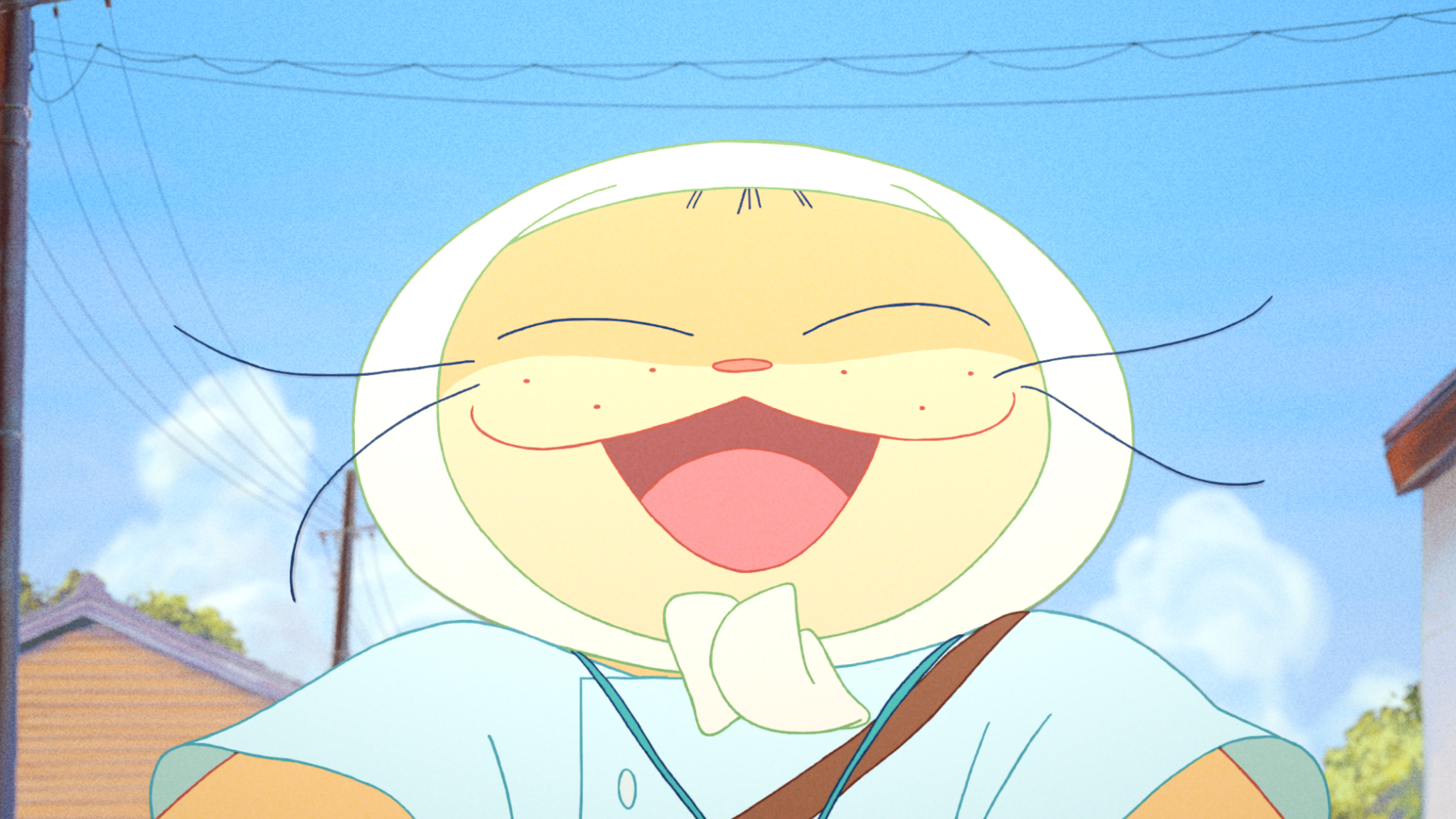
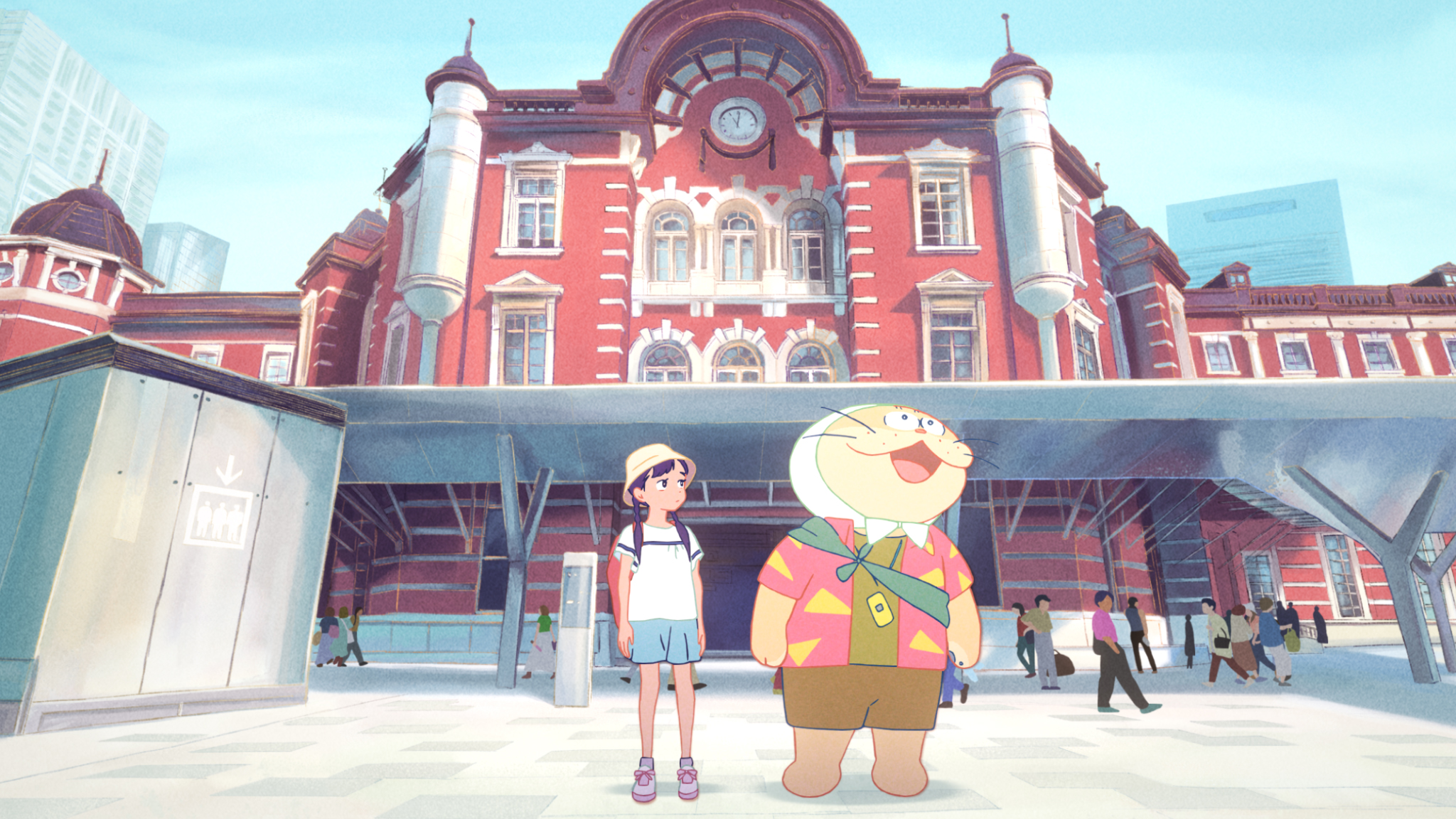
The movie Ghost Cat Anzu tells the story of Karin, 11 years old,who finds herself abandoned by her father in a small Japanese town, where her grandfather, a monk, resides. Her grandfather asks Anzu, his jovial and helpful, although rather capricious, ghost cat, to look after her. As their spirited personalities collide, sparks fly—yet perhaps only in the beginning.
The creation of the film is explored in the directors’ statement below:
“Based on Takashi Imashiro’s manga of the same name, Ghost Cat Anzu begins with the encounter between a ghost cat and a young girl who moves to the countryside after being abandoned by her father.
In the original work, Anzu is a ghost cat living with a monk in a temple. Unlike the typical expectations associated with ghost cats, which are supposed to surprise and scare people, Anzu behaves like an idle old man: he aimlessly sleeps, works part-time as a massage therapist, and is seen urinating in front of the temple. To present Anzu in a more appealing light, the film required a character to contrast with him.
This is how we introduced the original character of Karin into the film, a girl as diffcult to deal with as Anzu. Abandoned by her father, Karin doesn’t hesitate to lie and be mean to Anzu. While Japanese animated films often feature cute and energetic girls, we wanted to introduce a more ordinary, capricious, and selfish character, reflecting the everyday life of Japanese girls.
Karin, a grumpy young girl, counterbalances Anzu’s carefree attitude and offers the contrast between the characters. The same kind of contrast was needed for the settings. In the original manga, the story takes place in the town of Iketeru, a peaceful and universal rural area very commonplace in Japan. In order to make this countryside more appealing, we created universes that are completely opposite to it: Tokyo and Hell.
The film portrays several conflicts between Karin and Anzu, with the latter tasked with taking care of Karin. Her tantrums stem from her sole desire to see her deceased mother again. So, let’s go find her mother! This is how Karin and Anzu embark on a journey to Hell. There, Karin puts her life at stake with the aim of bringing her mother back from Hell and to the world of the living.
Confronted with Karin’s crime of daring to penetrate the gates of Hell, the demons and the god Enma cannot help but go to the world of the living, thus triggering chase scenes starting in Tokyo and spreading across the globe. Ghost Cat Anzu is a story that oscillates between tragedy and comedy, initiated by the simple wish of a young girl.
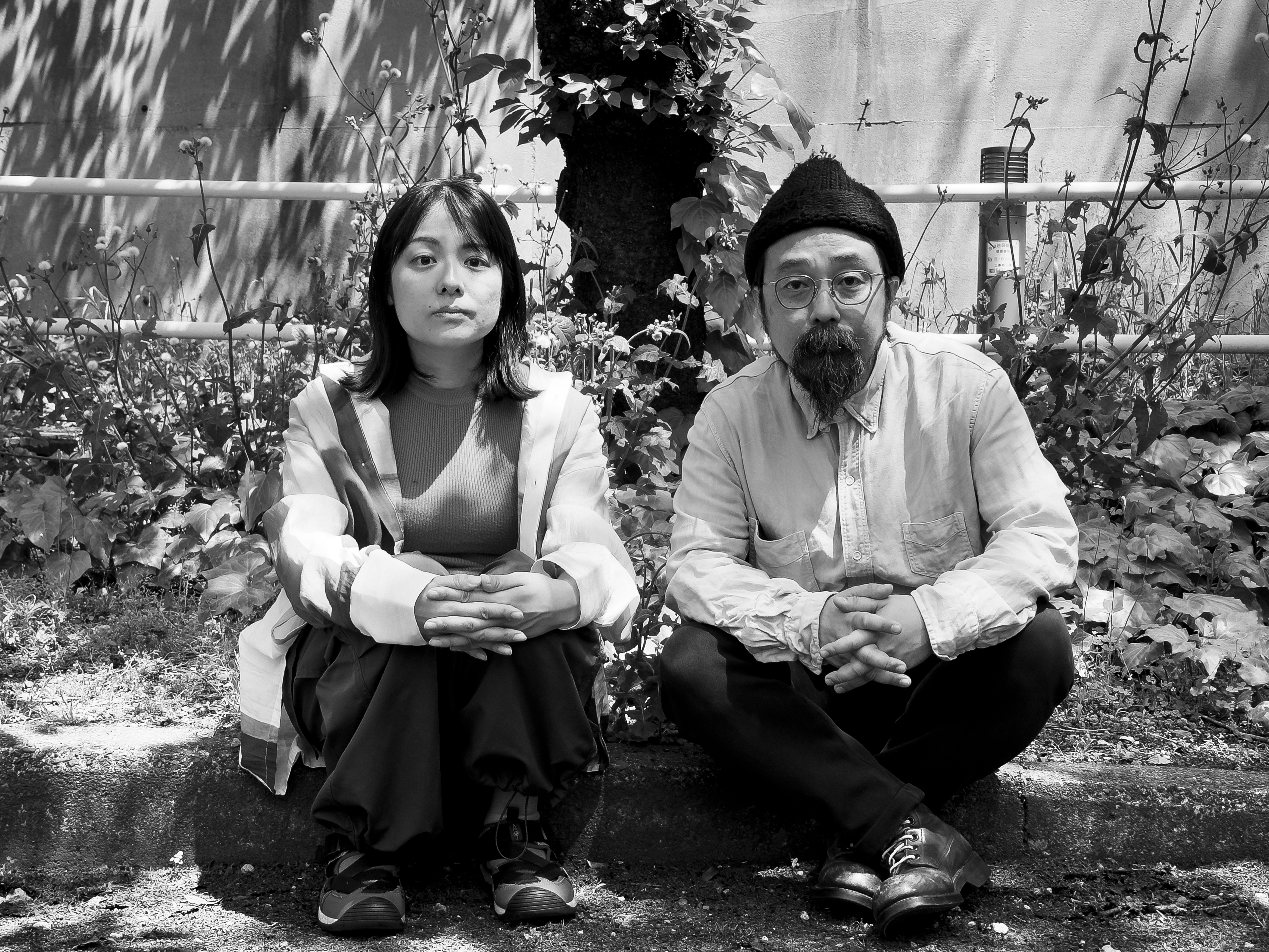
The production of the film relied on us for live-action shooting and for animation. The primary technique used is rotoscoping. Under Nobuhiro Yamashita’s direction, the team filmed the movie in live-action, accompanied by a cinematographer and sound engineers. The live-action sequences were then meticulously redrawn frame by frame by the animation team led by Yoko Kuno.
Although rotoscoping is an animation technique that has been around for a long time, it is rarely used today. So, why did we choose this technique? Because it captures the actors’ breathing, unexpected movements, and interactions. It is this “real” aspect that we sought. The exchanges of glances and the brief silences, which can only occur between living people, are miracles. Drawing them solely from our imagination is extremely diffcult. We consider making films to be an “observation.” Observing the accuracy of actors’ performances, animation, editing, and sound. Rotoscoping, which allows us to have an observant eye throughout the film’s production until the final stage, posed a challenge for our team. The moment we realized that this challenge was reflected in the film was when we fully appreciated the richness of cinema.
Most of the characters’ voices were also recorded on location during live-action shooting. We sought as much realism as possible in the music and sound effects, which are closer to live-action than animation. While maintaining this realism, the audience should be able to enjoy the harmony between characters such as the rounder cat and frog and the consistency between realistic sounds and manga-style images.
Julien De Man drew many iconic Japanese landscapes from scenes filmed in live-action. The vibrant colors and subtle lines added to the scenery are reminiscent of Pierre Bonnard’s neo-impressionist works, heavily influenced by Japanese art. These settings, which are imbued with such sensitivity, transcend borders,and present for the first time a Japan that had never been depicted before.
We are convinced that characters like Anzu and Karin, although unconventional, but certainly real, can gain authenticity through animation more than in a live-action film. These living characters go through life events, such as unexpected encounters and inevitable separations, as well as experiences firmly rooted in reality. By animating them, we sought to offer the audience a rewarding cinematic experience, combining the sweetness of a fairy tale with a realism more advanced than that of traditional live-action cinema.”